Building football tournament software ruined football for me
· 6 min read · by Rahul Dhileep Kumar
After building Veeran, a piece of football tournament management software, I can't just watch a match anymore. I watch the ball's path, every touch, and how players react. Here's what organising football tournaments looks like from the inside. Send help.

That's me up there, in the number 8 jersey.
Eight is my lucky number.
Obviously.
I used to watch football like a normal person.
Ball goes in.
I celebrate.
Ball doesn't go in.
I complain.
Simple.
Healthy.
Normal.
Then I worked on Veeran, a piece of football tournament management software.
Now I'm not normal anymore.
This post is about two things.
What it takes to organise football tournaments without losing your mind.
And how building software for them broke the way I watch the game.
What is football tournament management software?
Think about everything a tournament needs before a ball is kicked.
Teams have to register.
Someone has to check those registrations.
Players, parents and fans want to see what's happening.
Organisers need a back office that isn't a notebook.
Then the match day happens.
Hundreds of photos appear from nowhere.
Everyone wants theirs.
Football tournament management software pulls all of that into one place.
The alternative is five WhatsApp groups.
And one very stressed organiser.
Sounds like admin software, right?
It is.
But it did something weird to my brain.
What Veeran actually does
Veeran is a tournament engine for organisers.
I built it while working with CP Sports.
Here's what it covers:
- Registrations. Teams sign up properly, not via a blurry screenshot.
- Public workflows. What players, families and fans see.
- Admin workflows. What organisers use behind the scenes.
- Media management. Somewhere for all those match photos to live.
- AI photo features. Because nobody wants to scroll through hundreds of pictures.
Under the hood, it's Next.js, React, Supabase, AWS S3 and MongoDB.
Notice what's not on that list.
This version is about the organiser's workload, not flashy extras.
I'd rather do five things properly than fifteen things badly.
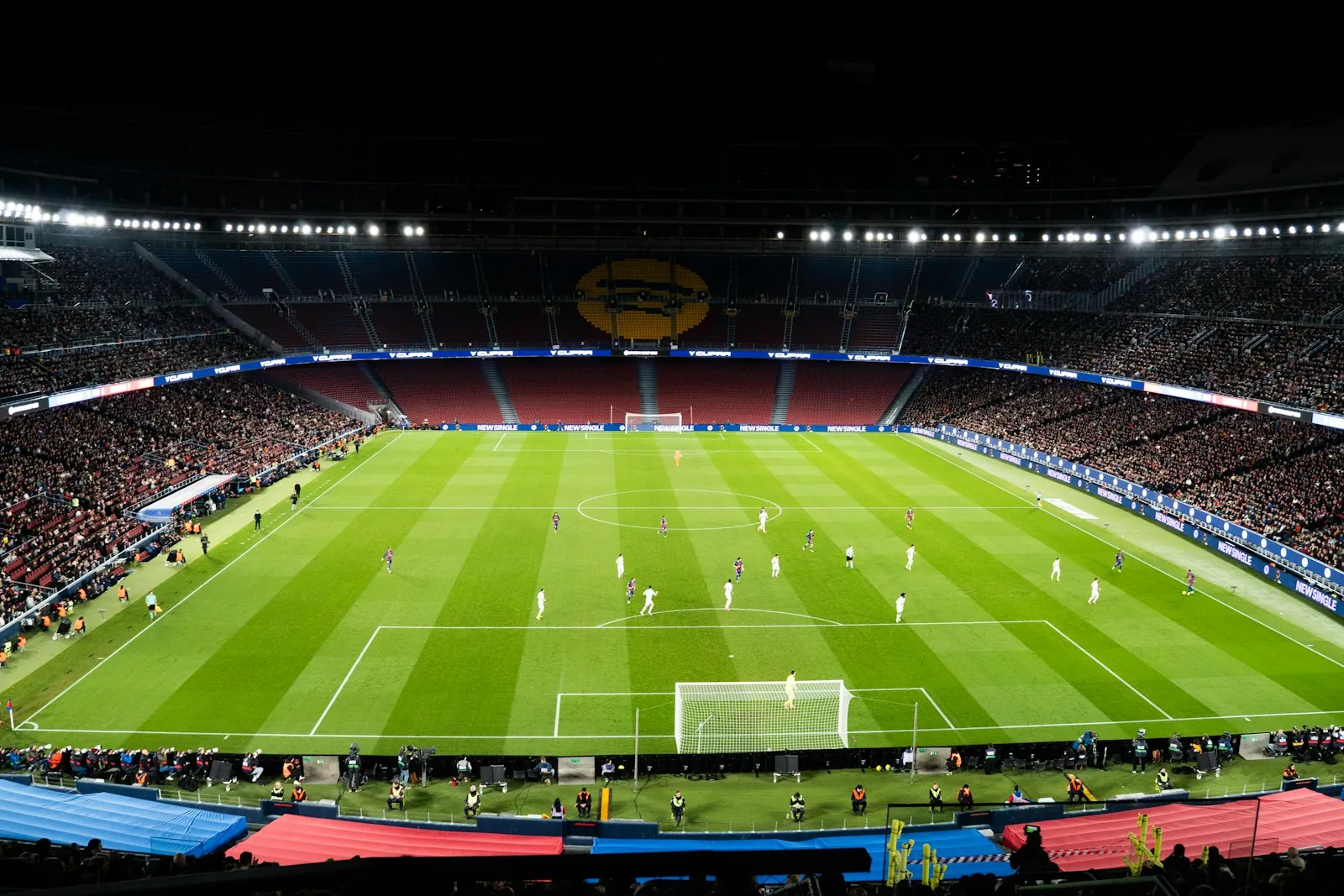
Photo: Maryam Tello on Unsplash
Organising football tournaments: the maths nobody warns you about
Tournament formats look simple on a poster.
Then you do the maths.
In a round-robin tournament, every team plays every other team.
The number of games is n(n − 1) ÷ 2.
Eight teams?
That's 28 matches.
Sixteen teams?
That's 120 matches.
Good luck finding the pitches.
A single-elimination tournament is kinder to your calendar.
Lose once and you're out.
Brutal for teams, lovely for scheduling.
Most local tournaments mix the two.
Groups first, knockouts after.
The format is only half of it.
Every match needs teams who registered correctly in the first place.
That's why I think registrations are the real foundation.
Tournament registrations: where the chaos starts
Bad registration data haunts you all tournament.
Wrong team names.
Missing players.
Two teams claiming the same kit colour.
My advice for anyone organising football tournaments:
- Collect everything once. Team name, contact, squad list, age group.
- Set a hard deadline. Then actually stick to it.
- Separate public and admin views. Fans don't need the organiser's notes.
- Plan for media early. Photos arrive faster than you think.
None of this is glamorous.
All of it decides whether match day is calm or a disaster.
How I watch football now: like a data person
When you build software around matches, you start seeing matches as data.
I don't just watch the ball anymore.
I watch its trajectory.
How it changes after each touch.
How the players react to it.
A simple pass becomes a story.
Where did it start?
What changed it?
Who reacted first?
Most people want to enjoy the game.
I want to pause it and draw arrows.
If you've ever watched a match with me, I apologise.

Photo: Jannes Glas on Unsplash
Football analytics and ball tracking: the grown-up version
The professionals have taken this obsession much further.
For the 2022 World Cup, FIFA's semi-automated offside technology used 12 tracking cameras.
They tracked up to 29 data points on each player.
That happened 50 times per second.
The ball had its own sensor too.
It sent data 500 times per second.
I tried something similar on a much smaller budget.
It's in the eulogy for smart ball v1.
Spoiler: it's a eulogy.
Then there's expected goals, or xG.
It gives every shot a probability of becoming a goal.
It looks at things like distance, angle and body part.
So when a striker misses a sitter, there's now a number for your disappointment.
Even the curve of a shot has a name.
The Magnus effect is why a spinning ball bends.
Roberto Carlos's famous "banana kick" is the poster child.
Knowing all this does not make me better at football.
It just makes me slower to celebrate.
Eleven variables, ninety minutes, no undo
I've played football my whole life.
I still play.
I'm still physically incapable of accepting a draw.
But building for football showed me something new.
The game is a beautiful mess of decisions.
Eleven people per side.
Ninety minutes.
Zero undo buttons.
Every touch changes everything after it.
That's exactly how software feels on a bad day.
Ask me about the night I broke production.
What building sports software taught me
Organisers need reliable, not fancy.
On match day, nobody cares about animations.
They care that the information is right.
Admin work is the real product.
Fans see the public pages.
Organisers live in the admin side.
If that part is painful, the whole thing is painful.
Football people are honest users.
If something annoys them, you'll hear about it.
Loudly.
Usually with hand gestures.
This isn't new to me.
Track My Academy exists because a coach complained.
Football people complaining is basically my product roadmap.

Photo: My Profit Tutor on Unsplash
How to choose football tournament management software
If you're an organiser shopping around, here's my checklist.
- Registrations that don't need chasing. This is where most of your time goes.
- Clear public pages. Players and families should find answers without calling you.
- A proper admin side. You should never need a spreadsheet on the side.
- Media handling. Photos are half the fun of a local tournament.
- Honest feature lists. If it says it does something, check it really does.
That last one matters.
Pick the tool that does what you need properly.
Ignore the one with the longest brochure.
FAQ
What does football tournament management software do?
It handles the admin around a tournament.
Think registrations, public information for fans and an organiser back office.
Some tools, like Veeran, also handle match media and photos.
How many matches are in a round-robin football tournament?
Multiply the number of teams by one less than that number.
Then halve it.
Eight teams play 28 matches, which is why most tournaments use groups.
Does football analytics make watching football less fun?
For me, it made it different, not worse.
I still feel the rush when the ball goes in.
I just also want to know how it got there.
So, is football ruined?
Not ruined.
Upgraded.
I still feel the same rush when the ball goes in.
I just also want to know its exact path.
And whether the tournament software did its job.
If you organise tournaments, have a look at Veeran.
If you run an academy, Track My Academy is the one for you.
That one is published by TrackMy Tech, my sports-tech company.
Want to talk football, software or both?
Book a call.
I promise not to draw arrows on your screen.