A coach complained, so I built sports academy management software
· 7 min read · by Rahul Dhileep Kumar
A football coach grumbled about attendance and fees. That boring headache became Track My Academy, my sports academy management software. Here is how a complaint turned into a company.

Cover photo: Adrià Crehuet Cano on Unsplash
Most startup stories begin with a vision.
Mine began with a complaint.
Not even my complaint.
Someone else's.
This is the story of how Track My Academy started.
It is sports academy management software now.
Back then, it was one tired coach and a messy register.
I'm writing it down because people keep asking where the idea came from.
The honest answer is less heroic than they hope.
The evening it started
I was coaching football part-time at a sports academy.
Nothing glamorous.
Cones, whistles, and a lot of shouting about passing.
One evening, a coach was complaining.
Managing attendance for his training batch was a pain.
Collecting payments was worse.
It was a small operational headache.
The kind everyone shrugs at and moves on from.
I didn't move on.
Small problems tend to stick with me.
Like a stone in your boot that you keep ignoring.
Until you can't.

Photo: Adrià Crehuet Cano on Unsplash
Why sports academy management software is a boring problem worth solving
Here's something nobody tells you about startups.
The best problems are usually boring.
Attendance registers. Fee reminders. Who paid. Who didn't.
Nobody makes a film about fee reminders.
But coaches deal with this every single day.
And every hour spent on paperwork is an hour not spent coaching.
That's not boring to them.
That's their whole evening.
Paul Graham has a name for why people skip these problems.
He calls it schlep blindness.
Your brain quietly hides ideas that involve tedious work.
Jared Friedman says something similar in YC's talk on getting startup ideas.
His example is Gusto, which makes payroll software.
Lots of programmers knew payroll software was bad.
Nobody fixed it, because it was boring.
Sports admin is the same flavour of boring.
Which, in my opinion, is exactly why it was worth doing.
Attendance tracking for sports academies
Let's start with the original villain.
Attendance tracking for sports academies sounds trivial.
It is not.
Batches change.
Kids switch timings.
Some coaches cover two branches.
Somebody always forgets the register at home.
Paper works until it doesn't.
Then you're reconstructing last month from memory and a WhatsApp group.
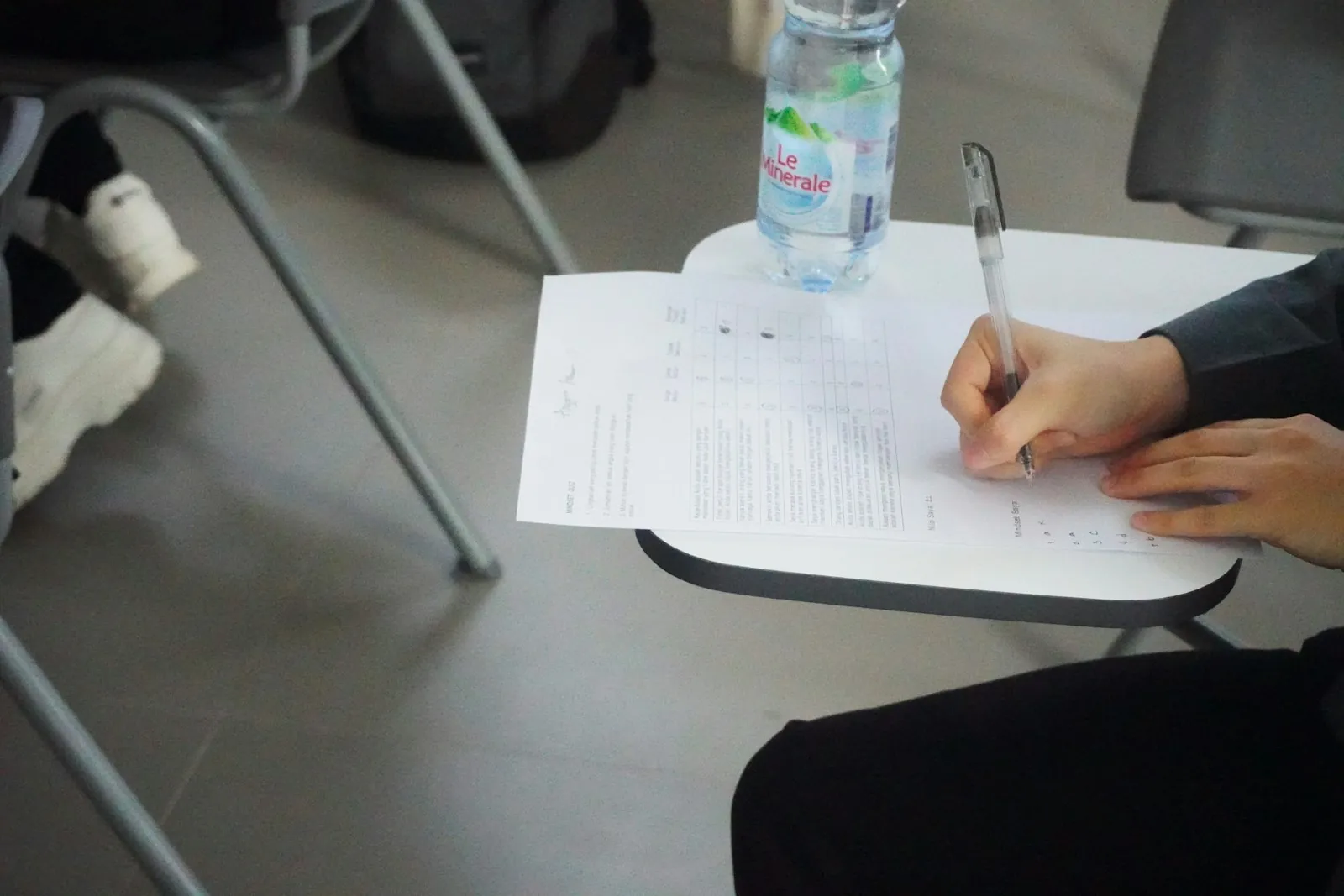
Photo: Billy Albert on Unsplash
In Track My Academy, attendance is the boring core.
Check-in can be by QR code, biometric or the mobile app.
Coaches get alerts when someone is absent.
That last bit matters more than it sounds.
A missed session is a small signal.
Three missed sessions is a conversation with a parent.
Fee collection and reminders without the awkwardness
Then there's money.
Nobody likes chasing fees.
Coaches especially hate it.
They signed up to teach a sport, not run accounts receivable.
So the software handles fee collection and reminders.
Invoices go out.
Reminders go out.
Payments get recorded.
The coach doesn't have to be the bad guy at the gate.
The system can be the bad guy.
Systems don't mind.
The stack includes React, FastAPI, MongoDB, Supabase and Razorpay.
Plus a few friends I won't list here.
I'll spare you the architecture diagram.
Player progress tracking and parent communication
Attendance and fees were the complaint.
But once the data was in one place, more became possible.
Player progress tracking was the obvious next step.
Coaches can log performance and see trends over time.
Pace, endurance, accuracy, skill.
Parents can see shareable player reports on their phone.
Which, frankly, saves a lot of "so how is he doing?" chats after training.

Photo: Jamie Street on Unsplash
Parent communication lives there too.
Announcements, session updates and direct messages.
No more screenshotting the timetable into six groups.
It's a software as a service product.
The academy doesn't host anything.
It just logs in.
It's also multi-tenant.
Many academies can share one system, each with separate data.
And it uses role-based access control.
Owners, coaches and parents each see what their role allows.
A parent should not be able to edit the fee ledger.
Tempting as that might be for them.
There's a web app and an Android app.
The iOS app is coming soon.
I built the mobile apps myself.
That sentence is doing a lot of heavy lifting.
And real academies run on it.
That part still feels slightly unreal.
From a 2006-looking app to building it myself
The road there was not straight.
At first, we hired someone to build it.
What came back was PHP, terrible design, and looked like 2006.
I wrote about the app that arrived from 2006 separately.
It is a whole saga.
So I decided to build it myself.
The first night was a MacBook Air.
A second-hand iPhone my cofounder got me.
ChatGPT and VS Code.
Mostly research.
Then a landing page I actually liked.
I learn by touching the thing until it makes sense.
Usually by doing it badly first.
Later came the less glamorous lessons.
Like hunting free AI trials across dozens of email accounts.
And the night I broke production by splitting the backend.
TrackMy Tech, CP Sports, and the titles I didn't expect
Track My Academy started in December 2024.
Since June 2026, it has a proper home.
TrackMy Tech Pvt Ltd is the sports-tech and SaaS company that publishes it.
It's bootstrapped.
I'm its Executive Director.
Which still sounds funny to me.
I'm also a student.
The exams have not been informed of my title.
More on that in exams, the office and a 1 a.m. gate.
Separately, I'm Technical Operations Manager at CP Sports.
I built its first official website and internal academy and event tools.
I also manage the digital team and coordinate coaches across branches.
That job keeps me close to how academies actually run.
It's also where Veeran was built.
What coaching taught me about building
Coaching and building products are weirdly similar.
You can't redo the first half.
Football has twenty-two players, ninety minutes, and no undo button.
Production software feels exactly the same.
Listen more than you talk.
That coach didn't pitch me a startup idea.
He just complained.
The idea was hiding inside the complaint.
Fix what people actually do.
Coaches don't want dashboards for fun.
They want to finish admin and get back to the pitch.

Photo: Connor Coyne on Unsplash
Finding startup ideas in real complaints
Stop looking for big ideas.
Paul Graham puts it neatly in How to Get Startup Ideas.
The verb you want is not "think up".
It's "notice".
Go and sit near people doing their actual jobs.
Wait for them to complain.
Write down the complaint.
Then ask a few annoying questions.
How often does this happen?
What do you do about it now?
Would you pay to never deal with it again?
If the answers are "daily", "a spreadsheet" and "yes", congratulations.
You may have a company.
It won't sound exciting at a party.
It will sound very exciting to the person who has that problem.
And honestly? Parties are overrated anyway.
I'd rather be at the office.
Which is probably a problem of its own.
FAQ
What is sports academy management software?
It's software that runs the admin side of a sports academy.
Attendance, fees, player progress and parent messages, in one place.
Ideally, so the coach can go back to coaching.
Does Track My Academy work on phones?
Yes.
There's a web app and an Android app, and the iOS app is coming soon.
Coaches and parents mostly live on their phones anyway.
How do I find a startup idea?
Notice problems instead of inventing them.
Boring, repeated, slightly embarrassing problems are the best ones.
Then check whether people would actually pay to make them go away.
Try it, or talk to me
If you run an academy, take a look at Track My Academy.
There's a free plan, so the risk is mostly your time.
If you'd rather talk it through, book a call with me.
Or read how the smart football prototype went.
Spoiler: it's in the title.