Student founder life: exams, the office, and a 1 a.m. gate
· 6 min read · by Rahul Dhileep Kumar
What being a student founder actually looks like: fast exam answers, late nights at the office, very patient parents, and the few time management habits that keep college and a startup both alive.

People ask me how I balance college and a company.
The honest answer?
I don't. Nobody does. We just pretend better.
I'm a student founder.
I'm doing a B.Tech in AI and Data Science.
I'm also Executive Director of TrackMy Tech.
And founder of Track My Academy.
That's a lot of hats for one head.
This post is about how the hats stay on.
Mostly, they don't.
Exam day, student founder edition
Here's how I write exams.
I write as fast as I can.
Then I leave.
Not because I'm a genius.
Because sitting in that exam hall feels like time stolen.
Every extra minute there is a minute not spent on everything else.
The product. The team. The bug from last night.
So I finish, I hand it in, and I go back to the office.
The invigilator probably thinks I'm very confident.
I'm not. I'm just in a hurry.
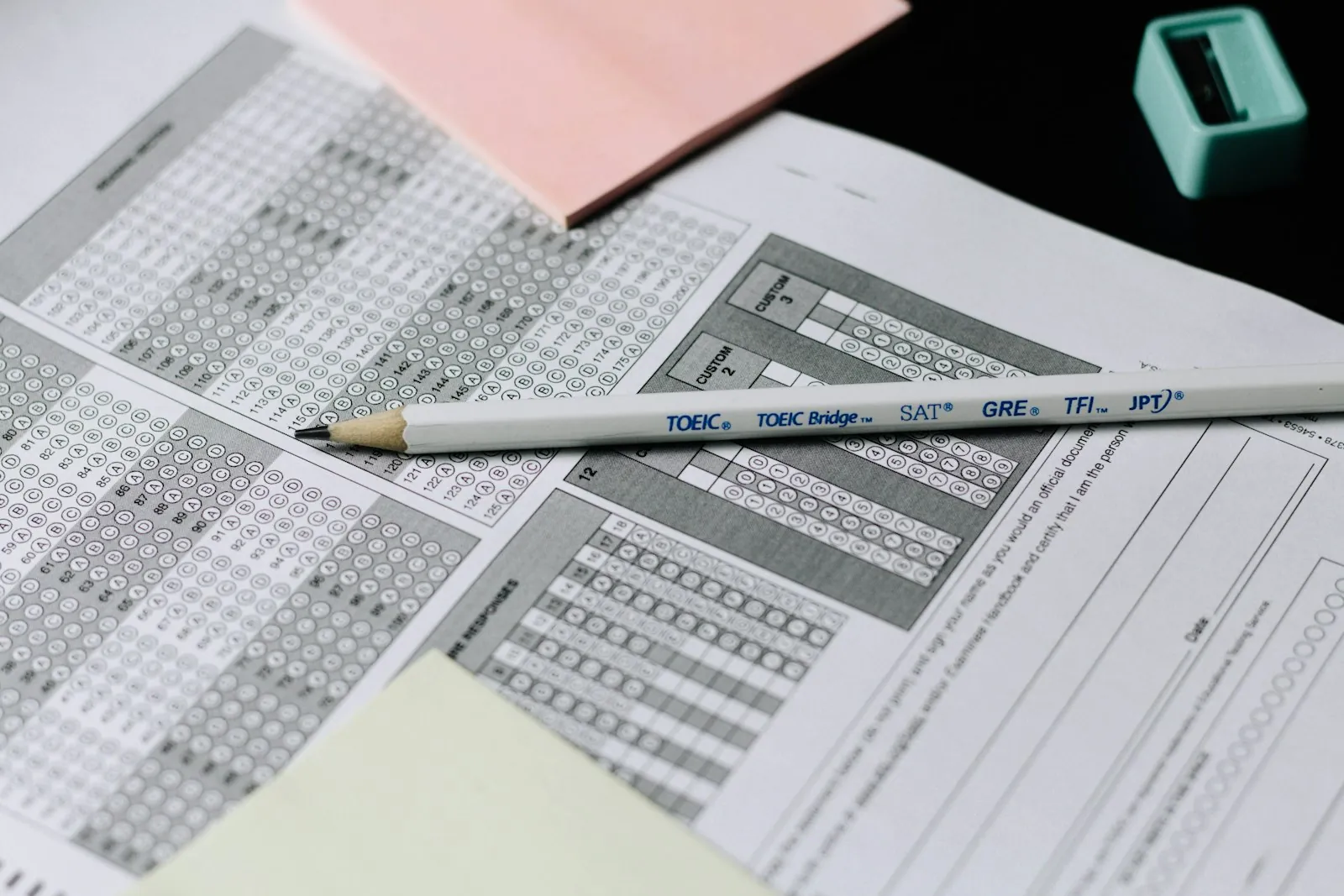
Photo: Nguyen Dang Hoang Nhu on Unsplash
I'm not recommending this method.
Your examiner may prefer slower handwriting.
I'm just telling you what happens.
The 1 a.m. gate
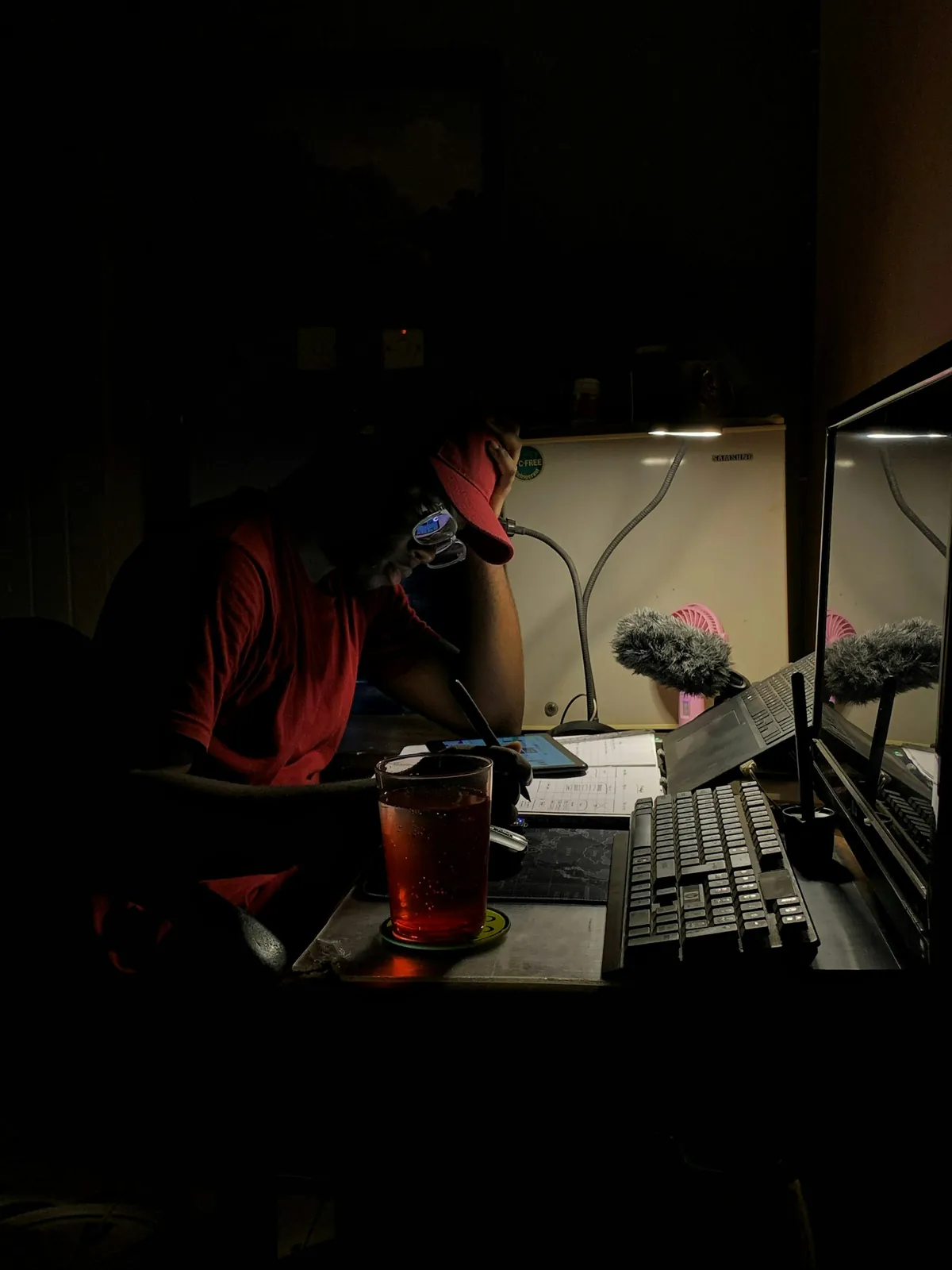
Some nights, I come home very late.
How late?
Late enough that my dad has to open the gate for me.
At one in the morning.
Let that sink in.
My dad. The gate. One in the morning.
I don't have a business metric for that.
But it's the most important support system I have.
The question I get at home
My mother still asks one question.
"Did you go to class?"
I'll leave my answer out of this.
My mother might read this.
Balancing college and a startup: what it actually costs
Let's be real for a second.
Doing both isn't some cool hustle aesthetic.
It's a trade-off. Every single day.
Sleep goes first. Always.
Then free time.
Then a lot of things your friends do that you don't.
I'm not complaining.
I chose this. I'd choose it again.
But I won't pretend it's free.
Anyone who says it's easy is selling a course.
The startup doesn't care about your timetable.
Production breaks whenever it likes.
Once, it broke for hours and I stayed in the office all night.
That one gets its own post: the night I broke production.
College doesn't care about your startup either.
The syllabus has not heard of product launches.

Sleep, the first casualty
My desk tagline is "Three monitors. One Monster can. Zero hours of sleep."
It's a joke.
Mostly.
Here's the boring, grown-up bit.
The CDC says adults need seven or more hours of sleep a night.
It links enough sleep to mood, stress and fighting off illness.
I am not a doctor.
I am barely a student.
So I'm not giving you sleep advice.
I'm just admitting the tagline and the CDC disagree.
The CDC is probably right.
Annoyingly.
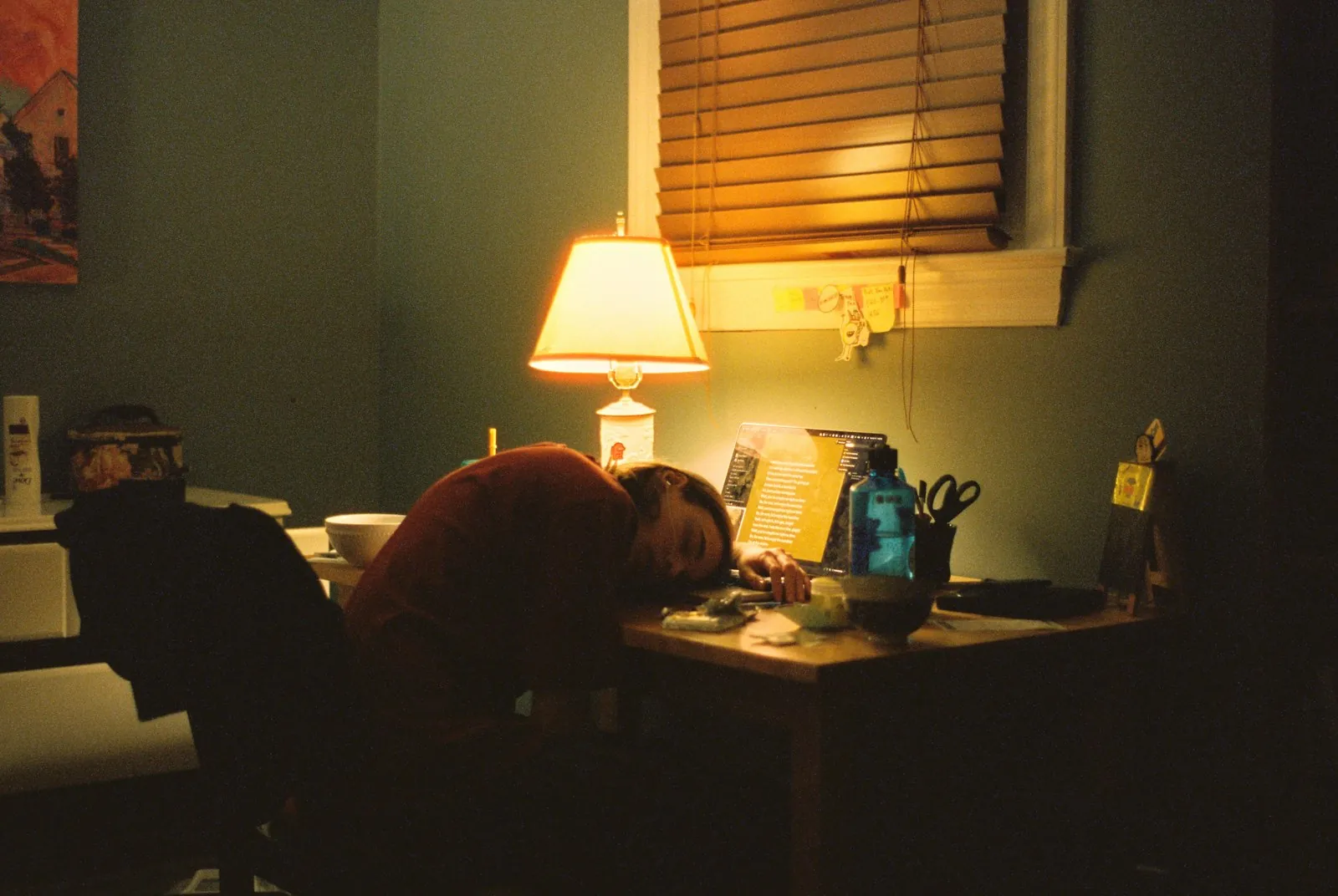
Photo: Mykyta Kravčenko on Unsplash
If you want the full monster-can tour, read three monitors, one monster can.
Time management for student entrepreneurs
I don't have a perfect system.
But a few ideas keep me functional.
Accept that something will be messy.
You can't be perfect at college and a company.
Pick what matters most this week.
Sort by urgent and important.
The Eisenhower method splits tasks into four boxes.
Do the urgent, important things now.
Schedule the important ones that can wait.
Delegate or drop the rest.
Most inboxes belong in "drop".
Give tasks a fixed box of time.
That's called timeboxing.
You decide the time first, then fit the work inside it.
It works because of Parkinson's law.
Work expands to fill the time available.
Give a bug the whole evening and it will take the whole evening.
Write it down where you can see it.
A list you can see beats a list you remember.
Sticky notes count.
My desk has plenty of them.
Whether I read them is another matter.
Protect one quiet block a day.
Even an hour without notifications is gold.
That's where the hard work happens.
Everything else is admin.
Use small windows.
A gap between classes is a small office.
A quiet evening is a sprint.
Remember why you started.
On bad nights, that's the only thing that works.
Support systems for a student founder
Nobody does this alone.
Anyone who claims they did has forgotten somebody.
At home, it's a dad who opens the gate.
And a mother who keeps asking about class.
I count both as support.
At work, it's the team.
When I'm stuck badly enough, it's Arun, our CTO.
He's the one person I trust to pick up at any hour.
That's a lot of trust to put in one phone.
If you're a student founder, find your Arun.
Then respect his sleep.
More than you respect your own, ideally.
Talking about it on stage
The funny part is that people now invite me to talk about this.
In March 2026, I was a guest speaker at VISTAS.
The talk was called "Student Founder".
It was about building a product from scratch and the realities of the SaaS market.
In September 2026, I ran a "Basic Python for Financial Analysis" workshop.
That was for B.Com (Hons.) students at Ethiraj College for Women.
The same month, I was chief guest at their AURORA '26 valedictory ceremony.
Chief guest.
Me.
The person whose mother still asks whether he went to class.
Should you start a startup while still in college?
I'm not going to tell you to drop out.
That's not my call, and I haven't.
Paul Graham wrote A Student's Guide to Startups on exactly this.
He also argues school is the best place to meet cofounders.
And if you're not sure, he says you should wait.
My take is simpler.
Start small.
Solve a real problem.
Mine started with a coach complaining about attendance.
And be careful who you pay to "teach" you.
I learned that one the expensive way: I paid for an internship.
FAQ
How do student founders balance college and a startup?
Badly, and on purpose.
Pick what matters this week, timebox the rest, and accept some mess.
A support system helps more than any app.
What is the best time management method for student entrepreneurs?
There isn't one best method.
Timeboxing and the Eisenhower method are a good start.
The real trick is saying no to things.
Is it worth being a student founder?
For me, yes.
It costs sleep, free time and some sanity.
I'd still choose it again.
Technically still a student
I'm still technically a student.
Emphasis on "technically".
One day I'll graduate.
I'm even planning graduate study from Fall 2027.
And maybe, just maybe, the gate will close before 1 a.m.
No promises.
Curious what all those late nights built?
Have a look at Track My Academy.
If you're a student founder and want to talk, book a call with me.
Or read how I ended up here, starting with switching from bio-maths to computer science.