I said I'd help a friend. Now I build molecular docking software.
· 6 min read · by Rahul Dhileep Kumar
BioPipeline started as a favour to a senior and friend. Now I lead AI and product on molecular docking software for plant research. What docking is, and why saying yes is dangerous.
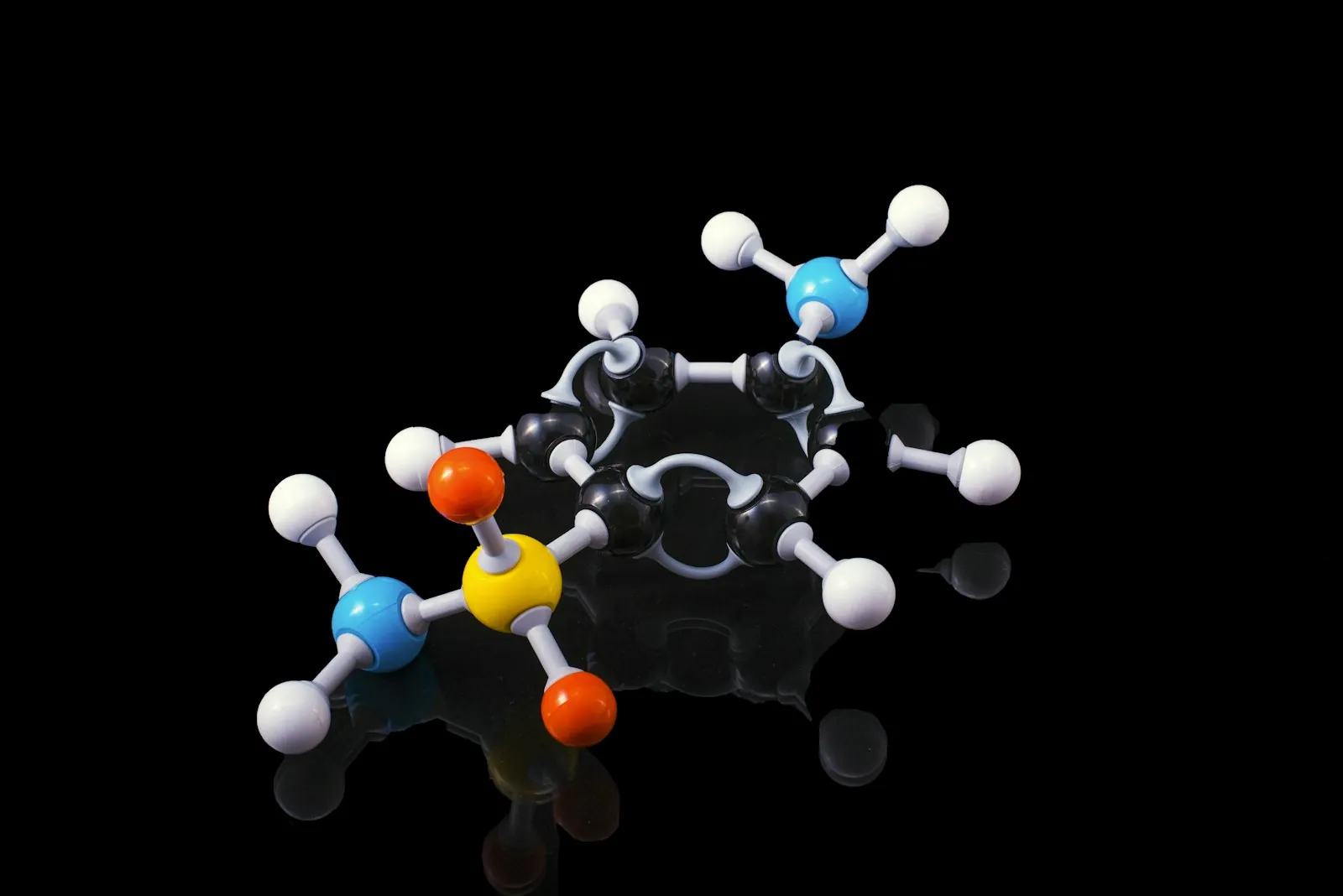
Cover photo: Terry Vlisidis on Unsplash
Some projects start with a pitch deck.
This one started with a sentence.
"Sure, I'll help."
That sentence is how I ended up working on molecular docking software.
Yes, really.
The guy who builds a sports academy app now has opinions about proteins.
This post is about BioPipeline, plant molecular docking as a SaaS.
It's also about what molecular docking actually is, in words a human can read.
And about the most dangerous phrase in my vocabulary.
The favour that became a job title
A senior of mine, also a friend, had an idea.
I told him I'd help.
That's it. That was the commitment.
No equity talk. No five-year plan.
Just a guy saying yes to a friend.
If you know me, you know "I'll help" is dangerous.
I never help a little.
I didn't do anything dramatic after that.
No big meeting. No breakthrough montage with inspiring music.
I just stayed involved.
Long enough to watch it grow far beyond that first conversation.
Today my title is AI and Product Development Lead at BioPipeline.
That started in March 2026.
Not bad for a favour.
What is molecular docking, in plain words?
Here's the version I wish someone had given me on day one.
Your body runs on proteins.
Lots of medicines work by sticking to a specific protein and changing what it does.
So a big question in drug discovery is simple.
Will this small molecule stick to that protein?
And if it does, how exactly does it sit there?
Molecular docking answers that question on a computer.
It predicts how one molecule fits onto another, and how well.
The classic picture is a lock and a key.
Wikipedia points out that's a bit too rigid, since both molecules can flex.
It says a "hand-in-glove" picture fits better.
I like that, because gloves are less stressful than locks.

Photo: niranjan borah on Unsplash
How molecular docking software actually works
Every docking tool has two jobs.
First, it searches.
It tries lots of positions and shapes for the molecule inside the protein.
A 2011 review by Meng and colleagues calls this step sampling.
Second, it scores.
A scoring function ranks each pose by how likely it is to bind.
Lower energy usually means a more stable fit.
That's the whole trick.
Search, then score, then hand a scientist a ranked list.
Simple to say. Very much not simple to build.
The same review is honest about the weak spot.
Scoring functions estimate binding affinity rather than calculate it exactly.
Pinzi and Rastelli make a similar point.
Their review says approximate scores often don't match lab measurements.
So why does anyone bother?
Because it's quick and cheap compared to the lab.
A 2024 review in the Annual Review of Biochemistry puts it nicely.
Docking is "far from perfect", yet it "has led to important discoveries".
It is less accurate than experiments, but "far faster and cheaper."
That's a trade-off I respect.
It's basically how I approach code too.
Plant molecular docking and where BioPipeline fits
Plants are full of interesting compounds.
Plant molecular docking asks which of them might bind to a target protein.
That's the space BioPipeline works in.
We built it from scratch with the founding team.
The stack is Next.js, TypeScript and Supabase.
The product covers the core docking workflow end to end.
You upload or select compounds.
You run docking.
You get molecular interaction outputs.
Then you look at the results.
Written like that, it sounds like four buttons.
It is four buttons.
Getting those four buttons to feel obvious is the actual job.
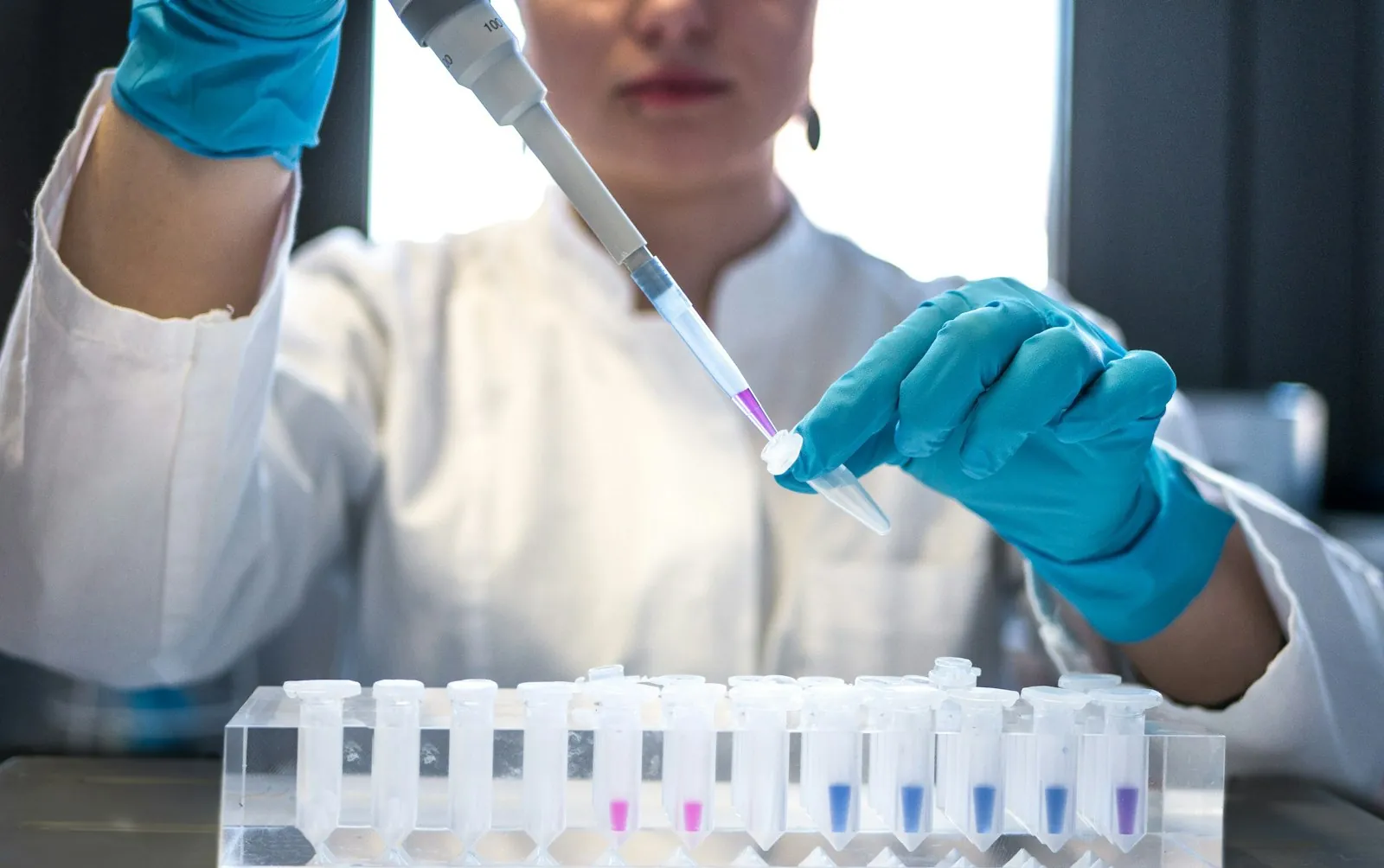
Photo: Julia Koblitz on Unsplash
Turning a scientific tool into a product
Good docking engines already exist.
AutoDock Vina, for example, is open source under a permissive Apache licence.
Protein structures are shared too.
The RCSB Protein Data Bank gives out 3D structure data at no charge.
So the science isn't locked away.
The gap, in my opinion, is everything around the science.
Files. Formats. Waiting. Remembering which run was which.
That's product work, not chemistry.
And product work is the bit I actually know.
Here's what I think matters when a scientific tool becomes a bioinformatics SaaS.
The workflow is the product.
Researchers don't buy an algorithm.
They want a path from "I have compounds" to "I have answers".
Results need to be readable.
A ranked list is useful.
A ranked list you can understand at a glance is better.
Don't hide the science.
Scientists want to know what ran and why.
A black box is a fast way to lose their trust.
Build boring things properly.
Uploads, storage and logins aren't exciting.
They're also where most users quit.
None of this is unique to biology.
It's the same lesson from building Track My Academy for coaches.
Find the annoying part. Make it less annoying. Repeat.
The bio-maths student comes back
Remember how I was a bio-maths student in class 12?
Then I switched to computer science.
Best decision I've ever taken, I guess.
That looked like the end of biology and me.
Turns out biology wasn't done with me.
It just waited for me to learn to code first.
Bioinformatics is literally that overlap.
Wikipedia calls it a field that develops computational methods and software tools for biology.
So the subject I left came back as a product I build.
I find that very funny.
My twelfth-grade self would find it suspicious.
Saying yes to side projects without losing your mind
My plate was already full.
TrackMy Tech, Track My Academy, CP Sports work like Veeran, and somehow college.
You can read about exams, the office and the 1 a.m. gate separately.
So adding BioPipeline wasn't exactly sensible.
But I think saying yes was right.
Here's my honest advice, for whatever it's worth.
Say yes to people, not just ideas.
I said yes because I trusted the person.
The idea came along for the ride.
Small yeses grow up.
"I'll help" can turn into a role.
Be ready for that.
Learn the domain, not just the code.
I had to understand the science, at least a bit.
Code without context is just typing.
Stay longer than feels reasonable.
Starting is exciting.
Staying is showing up when nobody's watching.
Most good things grow in the boring part.
I didn't do anything heroic on BioPipeline.
I just didn't leave.
That turns out to be a surprisingly rare skill.
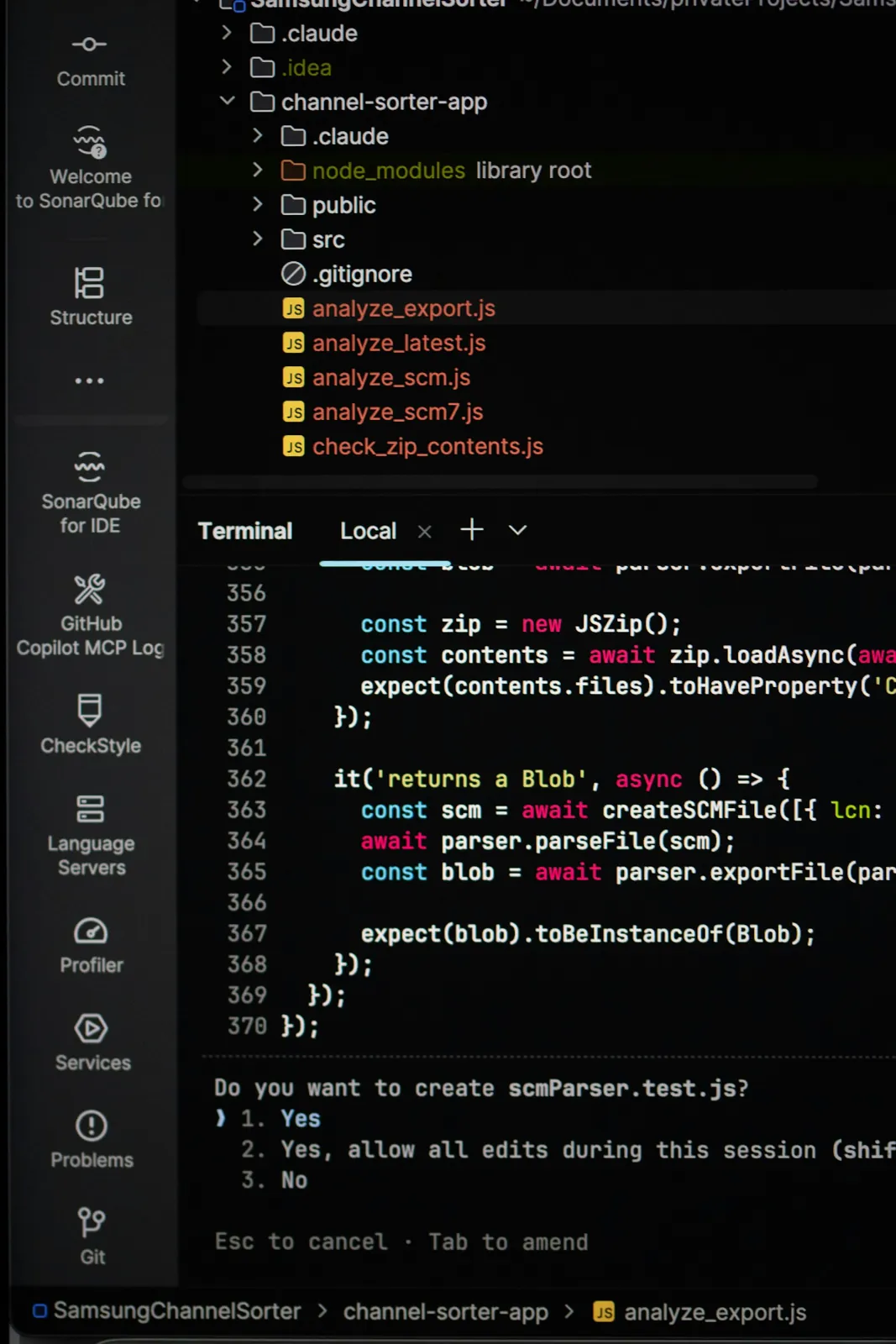
Photo: Bernd Dittrich on Unsplash
Even that terminal is asking for a yes.
It's a pattern now.
FAQ
What is molecular docking software used for?
It predicts how a small molecule binds to a protein.
Researchers use it to shortlist compounds before expensive lab work.
Think of it as a very nerdy filter.
Is molecular docking accurate?
Not perfectly, and the researchers say so themselves.
Scoring is an estimate, not a measurement.
It's fast and cheap, so it's used to narrow down options, not replace experiments.
What does BioPipeline do?
BioPipeline is a SaaS for plant molecular docking.
You upload or select compounds and run docking.
Then you review molecular interaction outputs and results.
The moral of the story
Be careful who you offer to help.
You might end up with a new job title.
And a lot more browser tabs about molecules.
If you work in plant research, go and try BioPipeline.
If you'd rather talk products, startups or docking, book a call with me.
Or read how the first Track My Academy build arrived from 2006.